Complete Adult Diaper Care Guide Pakistan — 2026 Caregiver Handbook
Complete Adult Diaper Care Guide Pakistan — Everything Caregivers Need to Know in 2026
Why Proper Diaper Care Matters More Than the Diaper Itself
Many caregivers focus entirely on choosing the right brand or absorbency level — and overlook that even the best adult diaper will cause rashes, infections, and discomfort if not used correctly. A diaper changed too infrequently causes skin breakdown within hours. A diaper applied incorrectly leaks regardless of absorbency. A patient whose dignity is respected during changes is more cooperative, less anxious, and heals faster. The research is clear: incontinence-associated dermatitis (IAD) — a painful skin condition caused by prolonged moisture exposure — affects up to 50% of patients in institutional care settings. In home care settings in Pakistan, where caregivers often lack formal training, the rate is likely higher. The guidance in this article addresses the root causes of these preventable complications.
Quick Navigation — What's In This Guide
- Chapter 1: Choosing the Right Adult Diaper — Tape vs Pull-Up, Sizing, Overnight
- Chapter 2: Step-by-Step Guide to Applying Tape-Style Diapers
- Chapter 3: Caring for Bedridden Patients — Special Considerations
- Chapter 4: How Often to Change — By Condition and Time of Day
- Chapter 5: Preventing and Treating Diaper Rash
- Chapter 6: Overnight Protection — Choosing and Using Night Diapers
- Chapter 7: Skin Care Routine for Incontinence Patients
- Chapter 8: Disposing of Used Diapers Safely and Hygienically
- Chapter 9: Talking to Your Elderly Parent About Using Diapers
Chapter 1 — Choosing the Right Adult Diaper
The first and most critical decision is product type. For Pakistan caregivers, two main types are relevant:
Tape-Style Diapers (Tab Diapers)
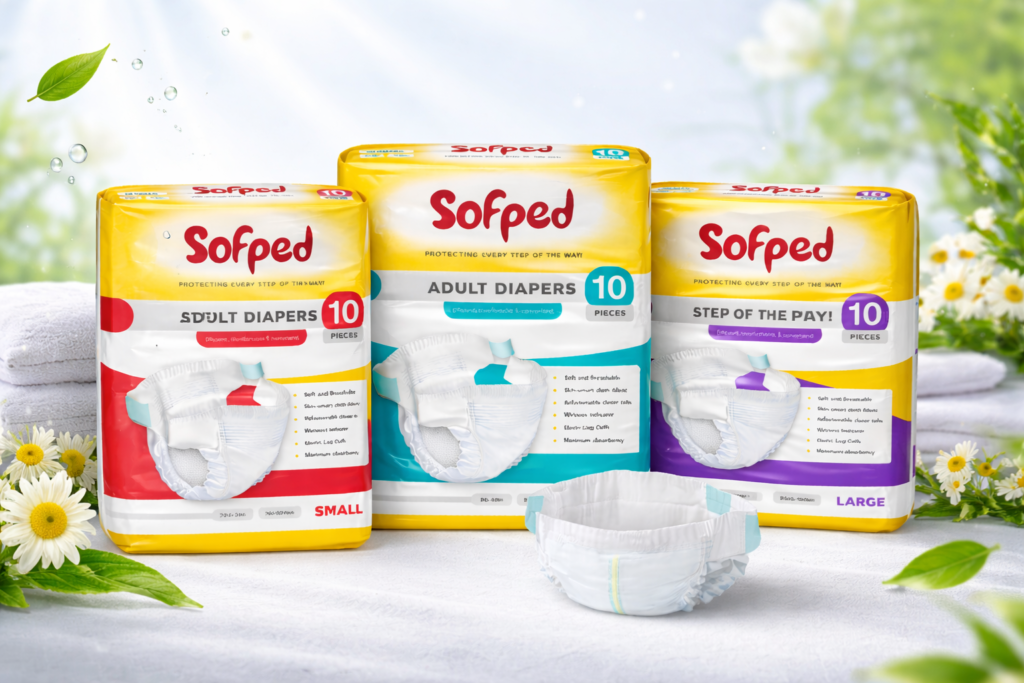
Best for bedridden patients, post-surgery recovery, or anyone with limited mobility who needs caregiver-assisted changes. Sofped’s tape diapers feature refastenable tabs and a wetness indicator. Applied lying flat; no standing required.
Pull-Up Diapers (Pant-Style)
Best for mobile seniors who can walk independently and prefer to manage their own hygiene. Worn exactly like underwear. Sofped pull-ups have tear-away seams for caregiver removal if needed.
Underpads
Used under the patient on the bed or chair — not worn on the body. Protect mattresses and should be used alongside tape diapers for overnight or heavy incontinence.
Quick Rule: If the patient can walk to the bathroom with support → pull-up. If they cannot stand or have heavy incontinence → tape diaper + underpad.
Chapter 2 — How to Apply a Tape-Style Diaper (8 Steps)
- Wash hands and put on disposable gloves.
- Place an underpad under the patient before beginning.
- Open the diaper fully. Fold it lengthwise with the soft side facing up.
- Roll the patient onto their side gently. Slide the diaper under them so the back panel (with tabs) aligns to the lower back.
- Roll the patient back to centre. Pull the front panel up between the legs over the abdomen.
- Unfasten the bottom tabs first, pulling diagonally upward. Then the top tabs.
- Check for a snug but comfortable fit. Leg cuffs should touch skin without digging in.
- Confirm the wetness indicator strip is centred and visible.
Full step-by-step guide with tips for uncooperative patients: How to Use Adult Diapers — Complete Pakistan Guide →
Chapter 3 — Bedridden Patient Care
Bedridden patients require tape diapers and underpads together, changed every 2–3 hours during waking hours and once during the night. Bowel movements must be cleaned immediately. Always reposition a bedridden patient every 2 hours to prevent pressure sores — diaper changes are the ideal time to do this.
Full bedridden care guide: Adult Diapers for Bedridden Patients Pakistan →
Chapter 4 — How Often to Change Adult Diapers
| Patient Condition | Daytime Change Frequency | Night Change | When to Change Immediately |
|---|---|---|---|
| Active / mobile adult | Every 4–6 hours or when soiled | Before sleep; change upon waking | Any bowel movement; strong odour; leakage |
| Elderly with light incontinence | Every 3–4 hours | Once at night or early morning | Any bowel movement; wetness indicator fully faded |
| Bedridden patient, moderate incontinence | Every 2–3 hours | Once at 2–3am recommended | Bowel movement; full wetness indicator; skin redness noticed |
| Bedridden, heavy incontinence | Every 2 hours | Every 3–4 hours through night | Immediately upon bowel movement; any sign of leakage |
For complete details on change schedules, read: How Often to Change Adult Diapers Pakistan
Chapter 5 — Diaper Rash Prevention
Diaper rash (Incontinence-Associated Dermatitis, or IAD) is caused by prolonged exposure of skin to urine or stool. Prevention is the only reliable strategy — once IAD appears, it takes days to heal. Every caregiver should follow these three rules:
- Rule 1 — Change promptly: Do not leave a soiled or fully-wet diaper for more than 30 minutes after discovery.
- Rule 2 — Clean gently: Use soft wet wipes or a damp cloth with mild soap at every change. Wipe front to back.
- Rule 3 — Apply barrier cream: Use a zinc oxide cream or petroleum jelly on the buttocks and perineal area at every change.
Full rash prevention guide: How to Prevent Adult Diaper Rash Pakistan →
Chapter 6 — Overnight Adult Diapers
Night-time protection requires a different strategy. The patient will wear the diaper 7–9 hours without change. This demands higher absorbency, better skin protection, and a reliable wetness barrier. Use Sofped tape-style diapers (highest absorbency in the range) with an underpad beneath the patient. Apply a generous layer of zinc oxide cream before putting on the overnight diaper. Check once during the night — around 2–3am — for bedridden patients.
Full overnight guide: Overnight Adult Diapers Pakistan →
Chapter 7 — Skin Care Routine
The skin under an adult diaper is subject to constant moisture, friction, and chemical irritation from urine. A simple daily skin routine dramatically reduces complications:
- At every change: cleanse with wet wipe or damp cloth; dry by patting (never rubbing); apply thin zinc oxide layer.
- Morning routine: full body wipe with warm water, apply barrier cream, check for any red areas or skin breakdown.
- Evening routine: air the skin for 5–10 minutes before applying the overnight diaper.
Full skin care guide: Adult Diaper Skin Care Tips Pakistan →
Chapter 8 — Disposal
Roll the used diaper inward (soiled side inside), secure with the adhesive tabs, place in a sealed plastic bag, and dispose in household waste. Do not flush. Change the waste bag from the room daily.
Chapter 9 — Talking to Your Parent
Many elderly Pakistanis refuse to use adult diapers out of shame or a belief that it signals the end of their independence. The conversation requires patience, the right words, and the right timing.
Frequently Asked Questions
How long can an adult diaper stay on?
Most adult diapers provide 6–8 hours of protection. Bowel movements require immediate change regardless of time elapsed.
What is the most common cause of diaper rash in adults?
Prolonged skin contact with urine — especially if the diaper is not changed frequently enough. Zinc oxide barrier cream prevents rash at every change.
Do I need to use underpads if the patient already wears a diaper?
For mobile patients: no. For bedridden patients: yes — always. The underpad provides essential backup protection for the mattress and simplifies cleanup.
Where can I buy Sofped diapers in Pakistan?
Sofped is available online with Cash on Delivery through Anabat La Mart, delivering to Karachi, Lahore, Islamabad, Faisalabad, and all major cities.