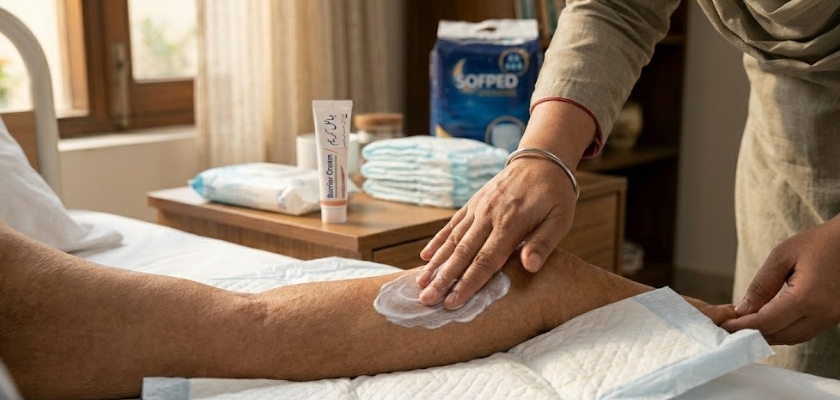
Adult Diaper Skin Care Tips for Incontinence Patients Pakistan — Daily Routine Guide 2026
The skin beneath an adult diaper is among the most vulnerable on the human body. It faces continuous exposure to moisture, friction, chemical irritants from urine and stool, and in Pakistan’s climate, relentless heat. Without a consistent skin care routine, incontinence-associated dermatitis, fungal infections, and pressure ulcers are almost inevitable in long-term diaper users.
This guide gives caregivers and patients a practical daily skin care routine, explains why each step matters medically, and provides Pakistan-specific guidance for managing skin health in our climate.
Skin care is one part of the full routine. For choosing, applying, and changing diapers, read the complete adult diaper care guide Pakistan.
Why Skin Care Matters More Than Product Choice
Many caregivers assume that choosing a ‘good’ diaper is enough to protect skin. It is not. Even the highest-quality diaper will cause skin breakdown if not changed frequently enough, if the skin is not cleaned properly between changes, or if no barrier protection is applied. Research consistently shows that the skin care routine is more important than the diaper brand.
| Skin Care Action | Impact Without It | Impact With Consistent Use |
|---|---|---|
| Barrier cream at every change | Skin pH rises from urine; breakdown in 4–12 hours | Skin pH protected; dermatitis risk reduced by ~60% |
| Gentle cleaning with every change | Residual enzymes from stool continue damaging skin | All irritants removed; healing environment maintained |
| Air time (skin breathes freely) | Heat and humidity accumulate; fungal risk rises | Moisture evaporates; skin recovers between exposures |
| Frequent change schedule | Prolonged moisture contact; IAD progression | Exposure time minimised; skin breakdown prevented |
| Skin inspection at each change | Lesions detected late; advanced breakdown | Early detection; treatment at Stage 1 before worsening |
The Daily Skin Care Routine — Morning, Change-Time, Evening
Morning Routine (at first morning change)
- Remove overnight diaper. Dispose hygienically.
- Wipe the entire diaper area with warm water and a soft cloth. Pat completely dry.
- Inspect carefully: sacrum, buttocks, inner thighs, perineum. Note any new redness.
- Apply barrier cream generously. Allow 2–3 minutes of skin-air time before applying fresh diaper.
At Each Change (mid-day)
- Wipe area with unscented wet wipe or damp cloth. Wipe front to back for female patients.
- Pat dry. Apply thin barrier cream layer.
- Air skin for 2 minutes while preparing the fresh diaper.
Evening Routine (before overnight diaper)
- Full warm water wash of the diaper area.
- Pat completely dry. Inspect for redness or new areas of concern.
- Apply a generous barrier cream — thicker than daytime application.
- Allow 5 minutes of air time — this is critical before the overnight diaper.
- Apply overnight diaper. Ensure breathable backsheet is facing outward (not plastic-backed if possible).
Pakistan-Specific Summer Skin Care Guidance
Pakistan’s summer months (April–October) dramatically increase skin care challenges for incontinence patients. Ambient temperatures of 35–45°C mean the inside of a diaper can reach 40°C+ — a near-ideal temperature for fungal growth and skin damage.
- Use breathable cloth-backed diapers rather than plastic-backed options — Sofped adult diapers Pakistan are designed with a cloth-like backsheet that helps reduce heat buildup during summer.
- Increase air time to 10–15 minutes morning and evening
- Fan the patient during air time — even a ceiling fan significantly reduces skin temperature
- Apply coconut oil (organic, cold-pressed) as an additional barrier layer under the zinc oxide cream — antifungal properties help in summer months
- Increase change frequency by one extra change per day during heatwaves (above 42°C)
- Keep the patient’s room at a comfortable temperature — air conditioning or a fan reduces diaper interior temperature significantly
Summer Warning: A yeast infection (Candida) looks like a bright red rash with small satellite lesions at the edges. It does NOT respond to zinc oxide cream. Clotrimazole antifungal cream (available at all Pakistani pharmacies, ~PKR 100–200) is the first-line treatment.
For a full prevention routine covering moisture control, zinc oxide barrier cream, and early rash symptoms, read our prevent adult diaper rash Pakistan guide.
Recognising Skin Problems Early
| Sign | Possible Cause | Immediate Action |
|---|---|---|
| Pink or red skin after each change | Early IAD from moisture contact | Increase barrier cream; more frequent changes |
| Bright red rash with satellite spots | Candida (fungal) infection | Antifungal cream (Clotrimazole); see pharmacist |
| Skin feels rough or papery | Chronic dryness from diaper friction | Gentle moisturiser after morning wash; air time |
| Small blisters or weeping | Moderate IAD Stage 2 | Doctor visit within 24–48 hours |
| Deep red persistent area over bony prominence | Early pressure ulcer (bedsore) | Immediate medical review; reposition patient more frequently |
| Dark discolouration or black area | Advanced pressure ulcer | Emergency — GP or A&E same day |
If the patient is mostly lying in bed, follow our adult diapers for bedridden patients Pakistan guide because pressure ulcers and diaper-area skin damage are much more likely in long-term bed care.
FAQs — Skin Care for Adult Diaper Users
How often should I apply barrier cream to an adult diaper user?
At every diaper change — even when the skin looks healthy. Prevention is the only reliable strategy. Once rash appears, treatment takes days; prevention takes seconds
Can I use regular moisturiser or coconut oil as a barrier cream?
Plain coconut oil has antifungal properties and a mild barrier effect — it is appropriate for prevention in low-risk patients. It does NOT replace zinc oxide cream for patients already showing redness or at high risk. Use both if needed.
Is Vaseline safe to use as a barrier cream for adults?
Yes. Petroleum jelly (Vaseline) is the most widely studied and affordable barrier cream. It is safe for all ages, all skin types, and widely available at Pakistani pharmacies. Apply generously at every change
For choosing the right diaper type, changing routine, overnight protection, disposal, and daily care, see our complete adult diaper care guide Pakistan.