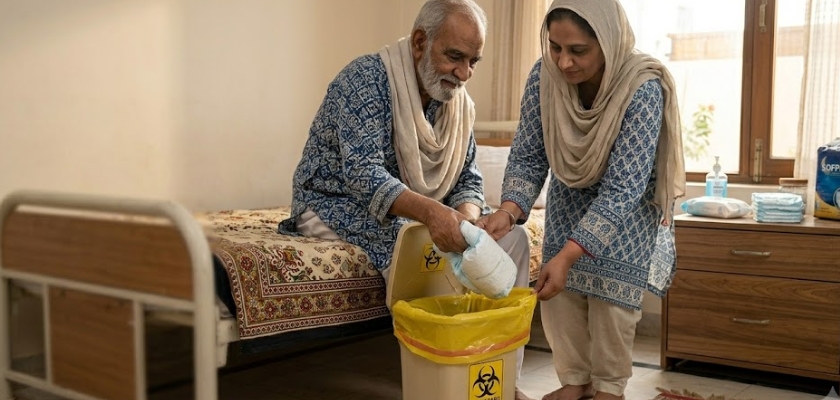
How to Dispose of Adult Diapers Safely and Hygienically — Pakistan Home Guide
Used adult diapers contain human waste and must be handled carefully to prevent the spread of bacteria, viruses, and unpleasant odours in the home. In Pakistan’s hot climate, an improperly handled diaper can become a serious hygiene problem within hours.
This guide gives caregivers a simple, practical disposal routine that maintains a hygienic home environment, controls odour, and respects the dignity of everyone in the household.
Safe disposal is one part of a complete care routine, so caregivers should also follow our complete adult diaper care guide Pakistan for changing, skin care, overnight protection, and hygiene basics.
The 5-Step Home Disposal Routine
- Fold the diaper immediately after removal. For tape diapers: fold the front panel back over itself, soiled side inward. The adhesive tabs help seal the roll. For pull-ups: tear the sides, fold inward. Avoid touching the soiled interior — hold by the clean outer edges only. If you are unsure how to remove, fold, and handle the diaper correctly before disposal, our how to use adult diapers Pakistan guide explains the full changing process step by step.
- Wrap in a small plastic bag immediately. A standard shopping bag knotted at the top is sufficient. Supermarkets in Pakistan provide these freely — collect a supply. Double-bag if the diaper is heavily soiled.
- Seal the bag tightly. Tie a firm knot. No tape or clips are needed if knotted correctly.
- Place in a dedicated covered bin inside the patient’s room or a nearby bathroom. Use a bin with a tight-fitting lid and a foot pedal so it can be opened hands-free.
- Empty the room bin into the outdoor household waste bin every 24 hours — or more frequently in summer or if the patient has a bowel condition.
Important: Do not flush adult diapers down the toilet. Even in areas with good plumbing, adult diapers will block sewage systems. The plastic and SAP core cannot break down in water.
If an underpad is wet or soiled during the change, fold it inward the same way, seal it in a plastic bag, and dispose of it with household waste; Sofped underpads Pakistan can help protect beds, chairs, and mattresses during daily care.
Odour Control — Keeping the Home Smell-Free
Odour management is one of the most distressing aspects of at-home incontinence care — for the patient’s dignity and the family’s comfort. These measures help significantly:
| Method | How It Helps | Available in Pakistan? |
|---|---|---|
| Dedicated bin with lid | Seals odour between disposal cycles | Yes — any housewares shop |
| Baking soda in bin | Neutralises ammonia odour inside the bin | Yes — kitchen supply shops |
| Scented disposal bags | Masks odour at the bag level | Yes — some supermarkets; baby section |
| Room with ventilation | Air circulation prevents odour buildup | Yes — open windows; fan |
| Regular bin cleaning (weekly) | Prevents residual odour in the bin itself | Yes — soap and hot water; bleach rinse |
Disposal When Away from Home
Pakistan caregivers increasingly take elderly patients to family events, doctor appointments, and mosques. Managing diaper disposal away from home requires preparation:
- Carry a small supply of sealed zip-lock bags or scented disposal bags in a discreet pouch
- Use the disabled-access toilet or family toilet where available — space and privacy for the change
- Seal the used diaper immediately in a zip-lock bag. Place it in a discreet outer bag or small backpack
- Find the nearest covered waste bin outside the venue — most mosques, hospitals, and shopping centres have these
- Do not leave a sealed diaper bag unattended in a public place
Is Adult Diaper Waste Classified as Medical Waste in Pakistan?
In home care settings, adult diapers used by non-infectious patients are treated as standard household waste in Pakistan. They are disposed of through the normal municipal waste system. No special medical waste handling is required for home use. However:
- If the patient has an active infectious condition (hepatitis, bacterial gastroenteritis), double-bag the diaper and consult the treating doctor about waste handling.
- Hospital and clinic settings must follow their facility’s medical waste disposal protocols — which are more stringent than home disposal.
For home caregivers handling multiple daily changes for a bed-confined patient, our adult diapers for bedridden patients Pakistan guide explains safer changing routines, skin checks, and hygiene care.
FAQs — Adult Diaper Disposal
How long can a sealed used diaper sit in the bin at home?
Maximum 24 hours in winter; 12 hours in summer (April–October) due to bacterial growth risk in heat. Empty the room bin daily as a rule.
Can I burn used adult diapers as some households do in Pakistan?
No. Burning diapers releases toxic fumes from the plastic backsheet and SAP core. This is harmful to respiratory health and illegal under Pakistan’s environmental regulations. Always use household waste disposal
What is the best bin to use for adult diaper disposal at home?
A 10–15 litre step-bin (foot-pedal operated) with a tight-fitting lid. Line with a bin bag. Available at housewares shops across Pakistan for PKR 500–1,500
For the full caregiver routine beyond disposal, including diaper changing, rash prevention, skin care, and overnight protection, visit our complete adult diaper care guide Pakistan.